Note: Image for advertising purposes only.
Key Takeaways
Couples who are carriers of a genetic disorder can have children normally. It’s recommended to start with blood tests to assess genetic risk together. If one partner is normal, the child will be safe from the disease. However, if both partners are carriers, current technologies for prenatal screening of embryos can reduce the risk of transmitting severe forms of the disease. Consulting a doctor for proper planning is a crucial step in preparing for the future health of your child, according to medical indications.
Starting family planning is joyful, but for many couples, anxiety often arises when one or both partners are carriers of a genetic disorder. The important questions that follow are: Can thalassemia be prevented? And will the children be healthy?
Medically, being a carrier is not the “disease” itself and doesn’t mean you can’t have children. It means having an abnormal gene hidden in the body that can be passed on to future generations. This article compiles information to guide couples in understanding their carrier status, self-care, and technologies that can help ensure a smooth pregnancy.
What is Thalassemia?
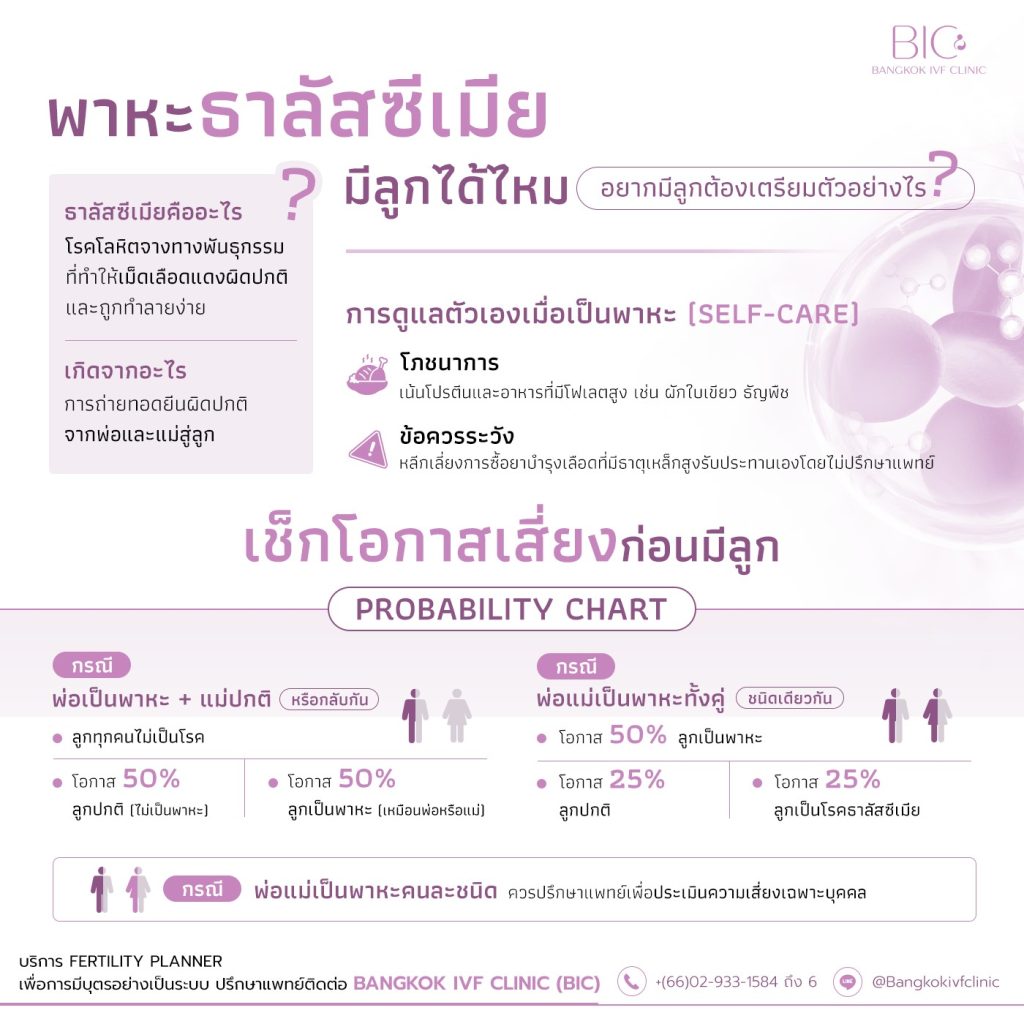
Thalassemia is a genetic blood disorder caused by a defect in the production of hemoglobin in red blood cells. This results in abnormal and fragile red blood cells that are easily destroyed. Patients often experience anemia, fatigue, and in severe cases, other complications may arise.
How is Thalassemia caused?
This disease is inherited through a recessive gene from both parents. If a child receives only one abnormal gene, they are called a “carrier,” and usually do not show symptoms. However, if they receive abnormal genes from both parents, they have a chance of developing thalassemia. The severity varies depending on the type of gene received.
What are the symptoms of a thalassemia carrier? Is it dangerous?
Most carriers are healthy with normal physical and intellectual abilities. Many are unaware of their carrier status until they undergo a detailed blood test.
However, some carriers may have mild anemia detected during a complete blood count (CBC), which will show relatively small red blood cells. Overall, this is not dangerous for daily life. Pre-marital or pre-pregnancy screening is the only way to accurately confirm carrier status.
If a couple are carriers, what are the chances of their child having the disease?
The chance of a child receiving an abnormal gene depends on the genetic status of both parents, divided into the following cases:
- Case where one parent is a carrier and the other is normal: None of the children will have thalassemia, but there is a 50% chance that they will be a carrier like their parent, and another 50% chance that they will have normal blood test results.
- Case where both parents are carriers of the same type of thalassemia: In every pregnancy, there is a 25% chance that the child will have thalassemia, a 50% chance that the child will be a carrier, and a 25% chance that the child will have normal blood test results.
- Case where the parents are carriers of different types of genes: This depends on the type of gene. A doctor will assess the risk of whether the combination of different genes will result in a severe form of the disease in the child.
What should thalassemia carriers eat and how should they take care of themselves?
Maintaining good health is fundamental for thalassemia carriers. The following guidelines should be followed:
Foods to eat:
Focus on foods high in protein to aid in blood cell production, and foods high in folate, such as leafy green vegetables, whole grains, and fruits. Folate is essential for the process of creating new red blood cells.
Precautions regarding iron supplements:
Thalassemia carriers should avoid self-medicating with iron supplements without consulting a doctor. Excessive iron intake, even if not due to iron deficiency, can lead to accumulation in various organs and be dangerous.
Pre-pregnancy preparation steps for couples:
To ensure a healthy pregnancy, couples should follow these medical steps:
1. Thalassemia testing:
Begin with a screening blood test. If a risk is identified, the doctor will order hemoglobin typing (Hb Typing) or a more in-depth DNA analysis to confirm the carrier type.
2. Genetic consultation:
Once the gene type is known, the doctor will provide consultation regarding the risk of the child having a severe form of the disease, giving the couple complete information to make informed decisions.
3. Choosing assisted reproductive technologies.
In cases where a couple has a high risk of their child having a severe thalassemia disorder, current technologies such as In Vitro Fertilization (IVF/ICSI) combined with Prophylactic Genetic Testing (PGT-M) screening are used to select embryos free of genetic disease before implantation in the uterus under close medical supervision.
To answer the question clearly: Can thalassemia carriers have children?
The answer is “yes,” if the couple is properly prepared and undergoes screening. Furthermore, being a carrier does not mean an obstacle to starting a family, but rather an opportunity to plan to ensure that the child born will have a good quality of life and grow up healthy under the close care of doctors.

Preparing for a Healthy Baby: Enhance Your Chances of Conception
If you are looking for a fertility clinic in Bangkok, Bangkok IVF Clinic (BIC) is delighted to guide you as your personal Fertility Planner. Our specialists design customized fertility treatments, including ICSI and IVF, tailored specifically to your needs.
We also provide expert comparative guidance on PGT-A vs. PGT-M vs. PGT-SR to help you understand their differences. This ensures you choose the right genetic screening technology to minimize the medical risk of passing down Thalassemia to your baby, strictly based on professional medical indications.
For More Information or to Schedule a Consultation:
- Tel: +(66)02-933-1584 to 6
- Line@: @Bangkokivfclinic
References
- Sukpan, K., Suknikhom, W., Tongsong, T., et al. (2022). Pregnancy outcomes among women affected with thalassemia traits. Retrieved May 15, 2026, from https://www.ncbi.nlm.nih.gov/pmc/articles/PMC9918558/.
- Thompson, A. A., Kim, H. Y., Singer, S. T., et al. (2013). Pregnancy outcomes in women with thalassemia in North America and the United Kingdom. Retrieved May 15, 2026, from https://pubmed.ncbi.nlm.nih.gov/23757266/.


Frequently Asked Questions about Thalassemia Carriers (FAQs)
Q: If the mother is a thalassemia carrier and the father is normal, is there a risk of their child developing the disease?
A: The child will not have a chance of developing thalassemia, but there may be a 50% chance of being a carrier like the mother, or a 50% chance of having normal blood test results.
Q: In the case where the father is a thalassemia carrier and the mother is normal, are there any special concerns regarding pregnancy planning?
A: The child will be safe from the disease, but may inherit the carrier gene from the father. Couples should undergo screening to determine their child’s blood status for future reference.
Q: How does thalassemia carrier status in pregnant women affect fetal development?
A: Normally, it does not affect the baby, but the mother may be more prone to anemia. Doctors often prescribe folate supplements and closely monitor her blood concentration levels.
Q: What happens if both partners are found to be carriers after pregnancy? How are thalassemia diagnosed in infants?
A: Doctors will recommend prenatal diagnostic tests, such as amniocentesis or chorionic villus sampling, to check the DNA to determine if the baby has a severe form of thalassemia.
Q: Can the PGT-M test for thalassemia screening be done in conjunction with the PGT-A test?
A: Yes, it can be done together to test for specific thalassemia genes and screen for normal chromosome numbers simultaneously. This helps reduce the risk of miscarriage and other genetic diseases.