Key takeaway:
Twin pregnancies are like a double miracle that completes a family. They can be identical or fraternal. The chance of naturally having identical twins is only 0.4% (or 1 in 250) and often depends on uncontrollable factors such as genetics and the mother’s age. While there is currently no method to guarantee 100% success in having twins, assisted reproductive technologies such as IVF combined with multiple embryo transfer can significantly increase the chance of fraternal twin pregnancies. However, twin pregnancies are considered high-risk pregnancies that may lead to premature birth and low birth weight babies. Therefore, couples should consult a reproductive medicine specialist to assess their physical readiness, screen embryos for chromosomes, and plan a safe pregnancy for both mother and babies.
Many people are thrilled to see families with twins, as welcoming two new members at once is a truly memorable experience. It’s no wonder that some couples start researching how twin pregnancies occur and whether it’s actually possible to conceive twins.
In reality, twin pregnancies can result from various factors, including natural bodily functions, genetics, the mother’s age, and even the use of modern infertility treatments. This article will explore how twins are conceived, the chances of having twins, and some factors that can increase the likelihood of a twin pregnancy.
What causes twins? Understanding the fundamentals of twin pregnancy.
Having twins is like receiving two grand gifts at once, bringing double the joy and double the smiles. But before stepping into the journey of caring for two little ones, let’s explore the miraculous mechanics of the body and how “twins” actually begin.
What is a Twin Pregnancy?
A twin pregnancy occurs when more than one fetus develops in the uterus simultaneously. Medically, this is considered a high-risk pregnancy because the human uterus is naturally designed to support one baby at a time. When two lives share that space, the mother’s body must work twice as hard—from pumping more blood to sharing vital nutrients. Therefore, a twin pregnancy requires more physical and mental preparation than usual.
The Difference Between Identical and Fraternal Twins
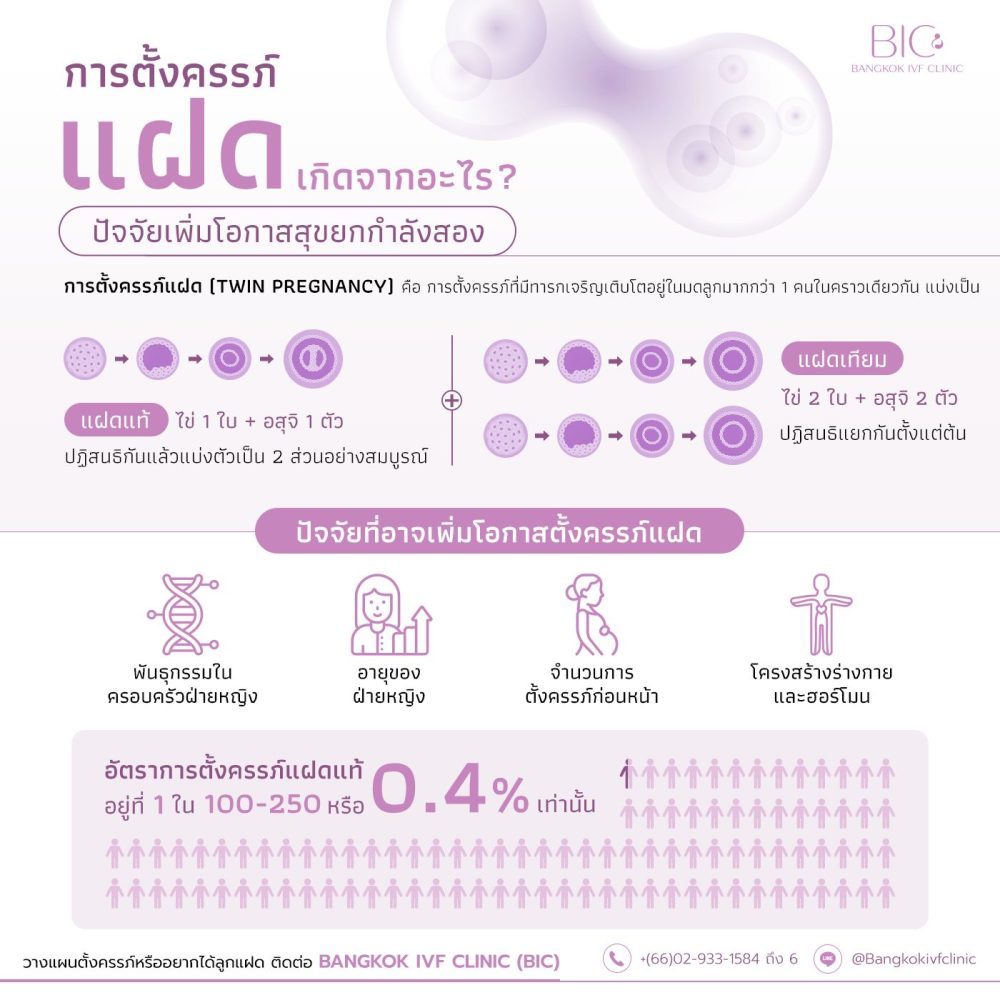
- Identical Twins (Monozygotic): Occur when 1 egg and 1 sperm fertilize and later split into two separate embryos. It’s like a single seed that grows and then splits into two identical flowers.
- Fraternal Twins (Dizygotic): Occur when 2 eggs and 2 sperm are fertilized independently. They grow together in the same womb, like two different seeds planted in the same garden, each with its own unique characteristics.
In summary: Identical twins share 100% of the same DNA, meaning they are always the same sex, have the same blood type, and look almost exactly alike. Fraternal twins share only 50% of their DNA, just like regular siblings; they can be the same or different sexes, have different blood types, and may only look slightly similar.
How Do Twins Happen?
- One egg splits into two embryos: Currently, medical science cannot pinpoint the exact cause of this split. It is considered a miracle of nature that happens by chance.
- Two eggs are fertilized at the same time: This is triggered by factors such as genetics, maternal age, and medical technology.
What Are the Odds of Having Twins?
Some families hope for this “double miracle” to complete their family all at once, but several factors influence the likelihood:
Natural Statistics In natural conception, twins are quite rare. Medical statistics show that the chance of having identical twins naturally is approximately 1 in 250 pregnancies.
Factors That Increase the Odds Factors that make some women more likely to conceive twins include:
- Family Genetics: If there is a history of fraternal twins on the mother’s side (e.g., grandmother, mother, or sisters), the chance of inheriting the “hyperovulation” gene (releasing more than one egg) is higher.
- Maternal Age: When a woman is 35 or older, ovarian efficiency decreases, but the body compensates by releasing higher levels of FSH (Follicle-Stimulating Hormone). This surge often causes two eggs to drop in a single cycle.
- Number of Previous Pregnancies: Mothers who have given birth multiple times are more likely to have twins in subsequent pregnancies as the body becomes more accustomed to hormonal changes.
- Body Structure and Hormones: Taller women or those with a higher BMI produce more IGF (Insulin-like Growth Factor), which makes the ovaries more sensitive to hormones, increasing the chance of multiple ovulation.
Why Do “Unintentional” Twins Occur?
For mothers who didn’t plan for twins but received a “double surprise,” it is usually due to the body over-performing in a specific cycle. This could be spontaneous multiple ovulation or hormonal shifts, such as when the body adjusts immediately after stopping birth control pills.
How to Conceive Twins: What Couples Should Know
Natural Methods for Conceiving Twins
If you are hoping for a twin pregnancy through natural means, it is important to understand that this is entirely determined by the body’s own biological mechanisms. There is no guaranteed method, as natural twin pregnancies occur in only about 0.4% of cases. Couples can, however, prepare for the possibility by consistently maintaining peak physical and mental health.
Medical Technologies That May Increase Twin Odds
Since nature cannot be commanded, medical technology plays a significant role. However, these technologies were not primarily designed to “produce” twins; rather, a twin pregnancy is often a byproduct of these fertility treatments:
- Infertility Treatments: Procedures like IUI (Intrauterine Insemination) or IVF and ICSI increase the chances of sperm and egg meeting under optimal conditions. If more than one egg is fertilized, fraternal twins will occur.
- Ovulation Induction: The use of medication to treat ovulation issues or to prepare for egg retrieval often causes the body to release more than one egg in a single cycle, thereby increasing the likelihood of fraternal twins.
- Multiple Embryo Transfer: In the IVF process, eggs and sperm are combined in a lab to grow into embryos. If two embryos are transferred back into the uterus to increase the chances of successful implantation, and both embryos thrive, the result is a twin pregnancy.
Planning a Twin Pregnancy with Modern Technology
As medical technology plays a larger role in pregnancy planning, twin pregnancies have become safer. This requires meticulous planning by reproductive medicine specialists, particularly regarding the following:
- Genetic Testing of Embryos: For couples undergoing IVF or ICSI who wish to transfer two embryos at once, technologies like PGT-A and PGT-M can screen the chromosomes before transfer. This allows doctors to select the healthiest embryos, increasing the success rate while managing the specific risks of a twin pregnancy.
- Safe Pregnancy Planning: Modern medicine prioritizes the health of the mother and the baby above all else. A healthy single pregnancy remains the primary goal of treatment. However, if a couple desires twins and the mother’s body is physically ready, specialists will help assess and plan the twin pregnancy with the utmost care.

Caring for a Twin Pregnancy: How it Differs from a Singleton Pregnancy
When a “double miracle” arrives, the mother’s body acts as a home that must expand its space and resources to accommodate the extra member. Consequently, self-care must be elevated to a specialized level.
Potential Risks in Twin Pregnancies
- Preterm Labor: The uterus has physical expansion limits. As two babies grow, space fills up faster than usual, leading to a higher chance of labor and premature birth (before 37 weeks) compared to singleton pregnancies.
- Birth Weight: Twins often have lower birth weights because they must share nutrients and space. In some cases, there may be “selective fetal growth restriction,” where one twin grows slower than the other.
- Maternal Health: Women carrying twins face a higher statistical risk of developing gestational diabetes and preeclampsia (high blood pressure during pregnancy).
Health Management for Twin Mothers
- Prenatal Care: It is essential to be under the close supervision of an obstetrician specializing in Maternal-Fetal Medicine (MFM). Appointments and ultrasounds will be more frequent than normal to monitor the detailed growth of both babies.
- Nutrition: Mothers of twins require more calories, protein, calcium, iron, and folic acid than singleton pregnancies to sufficiently support the organ development of two infants.
- Fetal Monitoring: Regular screening for twin-specific complications is vital, such as Twin-to-Twin Transfusion Syndrome (TTTS), which can occur in identical twins sharing a single placenta.
Couples Who Should Consult a Fertility Specialist
Whether you desire twins or not, if you are planning a family and fall into the following categories, you should consult a doctor to plan a safe pregnancy and minimize risks to both mother and child:
- You have been trying to conceive for over a year through regular unprotected intercourse.
- The female partner is aged 35 or older.
- There are hormonal or ovulation issues, such as irregular periods, absent periods, or a diagnosis of Polycystic Ovary Syndrome (PCOS).
- There is a history of more than one miscarriage, or male-factor infertility issues such as low sperm count or poor motility.
If you are planning to have a child or want to know your chances of having twins, an evaluation by a reproductive medicine specialist is the best way to create an appropriate plan. Today, various assisted reproductive technologies are available, such as ovulation induction medications, In Vitro Fertilization (IVF), and ICSI (Intracytoplasmic Sperm Injection). Many couples also look into the costs of ICSI, as well as future-proofing their family through embryo freezing and chromosome screening using PGT-A and PGT-M methods, which ensure a safer and more successful pregnancy.
At Bangkok IVF Clinic (BIC Clinic), a specialized obstetrics clinic, we don’t just treat infertility; we are your family planning consultants. We consider your preferred timeline for having a child and advise on the best time to start treatment to achieve your goals. Contact our fertility clinic today to consult with our reproductive medicine experts.
For more information or to schedule a consultation:
- Phone: +(66) 02-933-1584 to 6
- WhatsApp: @Bangkokivfclinic
References
- Twin Peaks: more twinning in humans than ever before. Retrieved March 19, 2026, from https://pmc.ncbi.nlm.nih.gov/articles/PMC8129593/ Multiple Pregnancy.
- Retrieved March 19, 2026, from https://www.acog.org/womens-health/faqs/multiple-pregnancy


Frequently Asked Questions About Having Twins (FAQs)
What are the chances of having twins naturally?
In general, natural identical twin pregnancies occur in approximately 1 in 100 to 250 pregnancies (a ratio of 1:100–250). however, these odds can increase due to factors such as genetics, maternal age, or the use of assisted reproductive technologies.
Can certain foods or herbs really help me have twins?
There is currently no medical evidence to confirm that any specific food or herb can directly cause a twin pregnancy. Conceiving twins depends primarily on biological and genetic factors.
Does IVF result in twins every time?
Not necessarily. Modern medical practice often prioritizes the transfer of a single healthy embryo to reduce the risks associated with twin pregnancies, which can involve more complications than singleton pregnancies.
How early can you tell the difference between identical and fraternal twins?
Doctors can typically assess this during an ultrasound as early as the first 7 weeks of pregnancy by examining the characteristics of the gestational sacs and the placenta.
If I want to plan for twins, where should I start?
The best starting point is a health check-up and fertility assessment with a specialist. This helps determine if your body is physically ready for pregnancy and allows you to choose the safest path forward for both mother and babies.