Many couples struggling with infertility choose IUI (Intrauterine Insemination) as their primary treatment because it is relatively uncomplicated and cost-effective. However, many still face disappointment when the procedure doesn’t result in the hoped-for pregnancy.
Understanding the factors behind IUI failure is crucial. By identifying these obstacles, couples can find better solutions, adjust their self-care routines, and ultimately increase their chances of a successful pregnancy.
What is IUI?
IUI stands for Intrauterine Insemination. In Thai, it is referred to as “การฉีดน้ำเชื้อเข้าสู่โพรงมดลูก.” It is one of the fertility treatments doctors commonly recommend to couples who have struggled to conceive. The core principle involves collecting a sperm sample from the male partner, selecting only the high-quality, strong, and highly motile sperm, and then injecting them directly into the female partner’s uterus during ovulation. This process makes it easier for the sperm to reach and fertilize the egg. Therefore, the health and quality of both the egg and the sperm are the primary factors determining the success of IUI.
Why IUI Might Not Result in Pregnancy
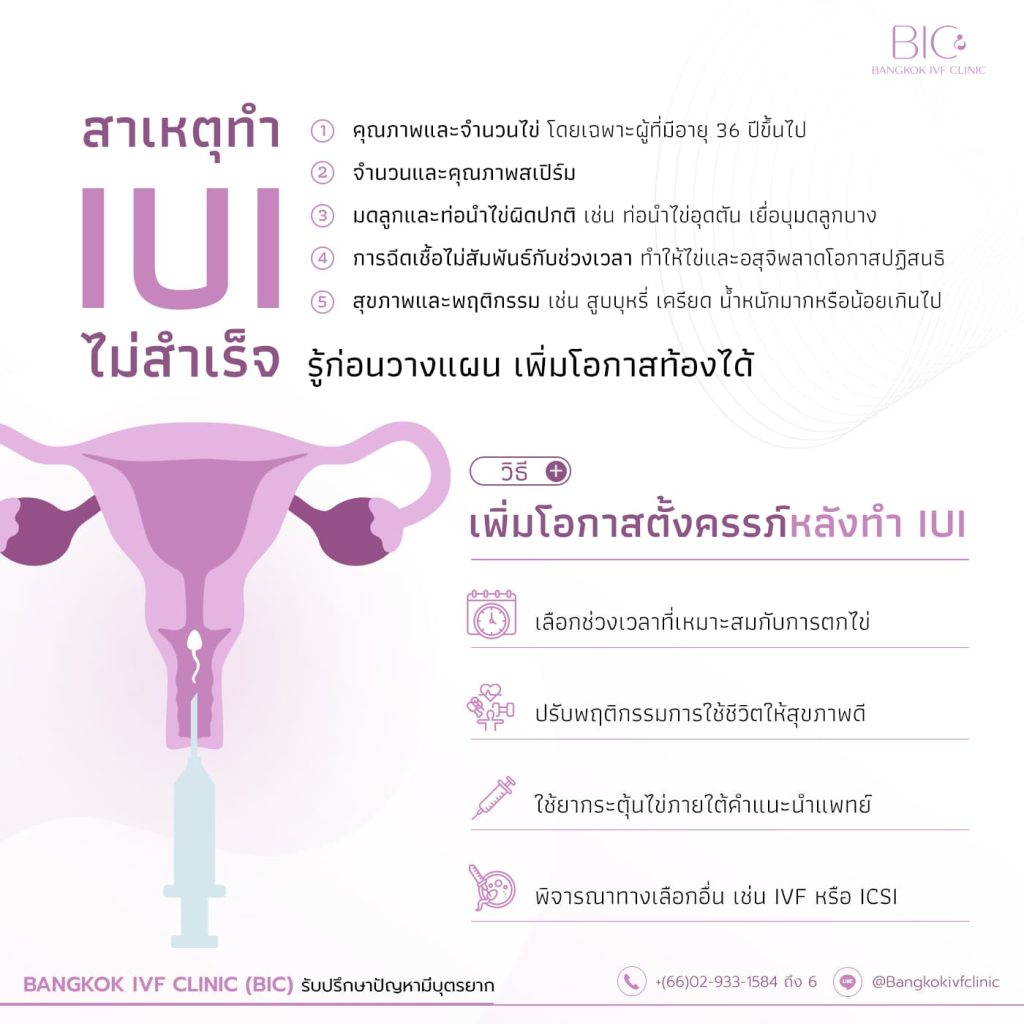
While IUI increases the chances of conception, many couples still face unsuccessful outcomes. The common reasons why IUI fails are often tied to the following factors:
1. Age and Egg Quality
This is the most critical factor. Egg quality naturally declines with age, particularly for women aged 36 and older. In these cases, both the quantity and quality of eggs decrease, which is a leading cause of fertilization failure or the embryo’s inability to implant.
2. Sperm Count and Quality
Although IUI concentrates healthy sperm and places them closer to the fallopian tubes, success is still difficult if the male partner has a low count of viable sperm or a high percentage of abnormally shaped or immobile sperm. Generally, a healthy sperm count for IUI should be at least 5 million motile sperm per procedure.
3. Condition of the Endometrium and Fallopian Tubes
The thickness and quality of the uterine lining (endometrium) are vital for embryo implantation. If the lining is too thin (less than 8 mm) or if there are abnormalities like chronic inflammation or scarring (adhesions), IUI may fail. Furthermore, since IUI relies on the body’s natural mechanisms, it cannot result in fertilization if both fallopian tubes are blocked.
4. Timing and Ovulation Mismatch
IUI must be performed precisely during the window of ovulation—typically 36 to 44 hours after a trigger shot. If the insemination happens too early or too late, the sperm and egg will not meet in time, leading to a failed cycle.
5. Lifestyle and General Health
Certain lifestyle factors directly impact reproductive cell quality and overall pregnancy success:
- Weight: Being significantly overweight or underweight (unbalanced BMI).
- Substance Use: Smoking, alcohol consumption, or drug use.
- Stress: High levels of chronic stress.
- Medical Conditions: Uncontrolled underlying diseases such as diabetes or thyroid disorders.
How to Increase Your Chances of Pregnancy After IUI
To minimize the risk of a failed IUI cycle, couples should focus on the fundamental factors that influence fertilization and embryo implantation:
- Precise Timing of Ovulation: Insemination must occur at the most accurate window following an HCG Trigger Shot to ensure the sperm meets the egg exactly when it is released.
- Healthy Lifestyle Adjustments: Maintain a healthy BMI, consume a diet that nourishes both eggs and sperm, get sufficient sleep, exercise regularly, and avoid toxins that can degrade reproductive cell quality.
- Medication Under Medical Supervision: Using appropriate ovulation induction drugs helps the ovaries produce high-quality eggs in the right quantity, which is a key driver for a successful pregnancy.
- Considering Other Options: If IUI fails 3–4 times—especially for women aged 35 and older—doctors may recommend transitioning to advanced assisted reproductive technologies (ART) like IVF or ICSI, which offer higher success rates.
Preparing for Your Next IUI Cycle
To avoid repeated disappointment, both partners should meticulously prepare physically and mentally to ensure the next process goes smoothly and successfully.
Detailed Medical Consultation
Investigate the root causes of infertility. If you have had previous unsuccessful IUI cycles, review the data thoroughly, including sperm quality, endometrial thickness, and procedural timing. Your doctor may suggest additional diagnostic tests, such as a Hysteroscopy, to check for chronic uterine inflammation or adhesions (scar tissue) that could hinder implantation.
Physical and Mental Health Check
- Manage Chronic Conditions: Ensure diseases that affect pregnancy—such as diabetes, thyroid disorders, hypertension, or heart disease—are well-controlled and within normal ranges.
- Manage Stress: High levels of chronic stress trigger cortisol, which can disrupt the balance of reproductive hormones. Proactively finding ways to reduce stress is vital.
Understanding the IUI Process
Having a clear understanding of the steps, limitations, and realistic success rates of IUI helps you manage expectations. This knowledge allows you to stay grounded and make informed decisions about changing your treatment plan if multiple IUI cycles do not result in pregnancy.
Post-IUI Recommendations to Increase Your Chances of Success
Self-care after insemination is a vital variable in determining whether the IUI cycle will be successful. Proper care helps create the optimal environment for embryo implantation and pregnancy.
- Adequate Rest: Immediately after the IUI procedure, you should lie still for 15–30 minutes. Afterward, you can resume your daily life normally. There is no need for total bed rest, but you should avoid strenuous activities and stressful situations.
- Avoid Intense Exercise: Refrain from activities that impact the abdominal area or require heavy exertion, such as heavy running, weightlifting, or swimming, during the first 2–3 days to reduce the risk of complications.
- Abstain from Smoking and Alcohol: These substances significantly interfere with embryo implantation and early pregnancy health; they should be strictly avoided.
- Prioritize Mental Health and Stress Reduction: Stress disrupts hormonal balance. Find ways to relax, such as light yoga or meditation. Keep a positive mindset and strictly follow your doctor’s instructions.
Understanding why IUI might not work allows you to plan your self-care more effectively. If you are facing infertility and looking to plan a pregnancy—whether you are interested in ICSI, sperm banking, egg freezing for the future, or other fertility treatments—Bangkok IVF Clinic (BIC) is ready to help. Our team of reproductive medicine experts uses certified technologies to create a personalized fertility plan tailored to your specific needs.
For More Information:
- Tel: +(66) 02-933-1584 to 6
- Line@: @Bangkokivfclinic
References:
- Why does IUI fail? Retrieved September 30, 2025, from 3 Crucial Factors https://www.cryosinternational.com/en-gb/dk-shop/private/blog/iui-failure/
- That Determine IUI Success Rate. Retrieved September 30, 2025, from https://www.webmd.com/infertility-and-reproduction/what-is-iui-success