
Summary of Key Points:
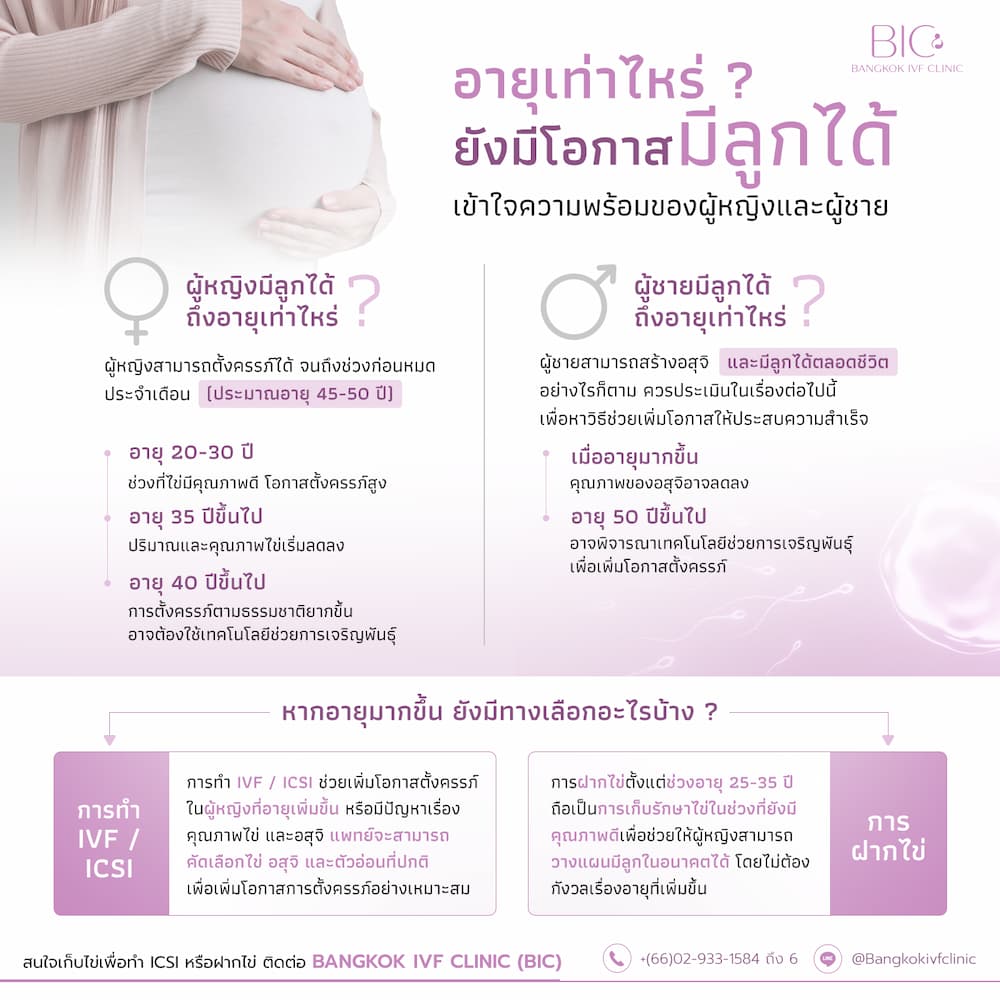
At what age can women and men have children? A woman’s chances of getting pregnant are highest between the ages of 20 and 30 and decrease after age 35. While men can still have children even at an older age, sperm quality gradually declines. Therefore, the ideal age for conception depends on the physical readiness and the couple’s relationship. For older couples, assisted reproductive technologies such as IVF and ICSI are effective options to increase the chances of pregnancy.
Pregnancy doesn’t come easily as one gets older, leading many to question the ideal age for conception, especially as they age. This often results in the question, “What is the maximum age for women to have children?”
This article will explain the appropriate age for conception in both women and men, as well as medical methods to increase the chances of pregnancy, including IVF and ICSI.
1. Up to what age can women have children?
A woman’s age plays a critical role in pregnancy. As age increases, the ovulation process slows down and egg quality declines, directly impacting the chances of natural conception.
- Ages 20–30: This is the peak fertility period. The body is highly prepared for pregnancy as the ovaries function optimally, egg quality is high, and ovulation is regular, resulting in the highest rates of natural conception.
- Age 35 and older: Once a woman reaches 35, both the quantity and quality of eggs begin to decrease significantly. For women over 38, the chances of natural pregnancy drop even further, and the risk of pregnancy complications may increase.
- Age 40 and older: Natural pregnancy becomes significantly more difficult due to the rapid decline in egg quality. In many cases, assisted reproductive technologies like IVF or ICSI are necessary to achieve pregnancy. Women in this age group who plan to have children may consider egg freezing in advance or working closely with a reproductive specialist to create a fertility plan.
2. Up to what age can men have children?
Men can father children at a much older age because the male body produces new sperm throughout life. However, the production process and the quality of sperm can deteriorate as age advances.
- Ages 20–40: During this stage, sperm count and quality are typically at their best, with the peak reproductive performance occurring between the ages of 20 and 30.
- Ages 40–50: As men enter their 40s and 50s, sperm quality may begin to decline in terms of count, motility (movement), and overall morphology (shape), which can lower the chances of fertilization.
- Age 50 and older: Sperm production decreases noticeably in men over 50. Additionally, there is an increased risk of genetic abnormalities in the embryos.
If age-related sperm quality issues are identified, doctors may recommend ICSI to select the healthiest sperm and improve the chances of a successful pregnancy.

3. What is the best age to have a child?
The question of “What is the best age to have a child?” doesn’t have a one-size-fits-all answer. It depends on various factors, including physical and mental health, family readiness, and the future plans of each couple.
Generally, women in their 20s to early 30s have the highest chances of natural conception. However, many women today choose to have children later in life due to education, career goals, and financial stability.
If you plan to conceive at an older age, consulting a reproductive specialist to assess your physical readiness—along with considering assisted reproductive technologies like IVF or ICSI—can help optimize your chances of success.
4. Can you get pregnant at age 50?
Getting pregnant after age 50 is highly challenging because most women have already entered menopause, meaning natural ovulation has ceased.
However, if a woman over 50 wishes to become pregnant, it is usually achieved through medical assistance, such as IVF or ICSI using eggs that were frozen at a younger age. This process requires rigorous evaluation and close monitoring by a fertility specialist, as pregnancy at this age carries higher-than-average health risks for both the mother and the baby.
5. Assisted Reproductive Technology (ART) to Increase Pregnancy Chances
Assisted reproductive technologies, such as IVF and ICSI, play a crucial role today—especially for women over 35 or couples facing challenges with ovulation, egg quality, or sperm quality.
- IVF (In Vitro Fertilization): An extracorporeal fertilization process that allows specialists to closely monitor and control the development of the embryo.
- ICSI (Intracytoplasmic Sperm Injection): A technique that boosts fertilization chances in cases of low sperm quality by injecting a single sperm cell directly into the egg.
These technologies open doors, making pregnancy possible even at an advanced age.
Start Your Family Planning Today
If you are planning to have a child and are looking for a fertility consultation in Bangkok, we invite you to consult with our experts at Bangkok IVF Clinic. We offer a comprehensive range of services, including IVF, ICSI, egg freezing, and pre-conception health assessments, all overseen by specialists with over 30 years of experience.
We are more than just a fertility clinic; we are your family planning partners, dedicated to providing the guidance and care needed so you can build your family when you are ready.
Contact us today to schedule a consultation for IVF or ICSI, or to inquire about our costs and current promotions.
For more information or to schedule a consultation:
Phone: +(66) 02-933-1584 to 6
WhatsApp: @Bangkokivfclinic
References
- Having a Baby After Age 35: How Aging Affects Fertility and Pregnancy. Retrieved January 19, 2026 from https://www.acog.org/womens-health/faqs/having-a-baby-after-age-35-how-aging-affects-fertility-and-pregnancy
- Age and fertility. Retrieved January 19, 2026 from https://www.betterhealth.vic.gov.au/health/conditionsandtreatments/age-and-fertility


Frequently Asked Questions about Age and Having Children (FAQs)
Q: Up to what age can a woman get pregnant?
A: A woman can generally get pregnant until she reaches menopause, which typically occurs between the ages of 45 and 50. However, the chances of natural conception decline significantly after the age of 38, and medical assistance via assisted reproductive technology is often required as age increases.
Q: Who are IVF and ICSI suitable for?
A: IVF and ICSI are ideal for couples facing infertility challenges, such as women over the age of 35, individuals with ovulation issues or blocked fallopian tubes, and men with low sperm quality. A reproductive specialist will evaluate each case to determine the most appropriate treatment path for the individual.
Q: How long can frozen eggs be stored?
A: Eggs can be preserved for a long period, typically 5–10 years, provided they are kept in a standardized cryopreservation system. It is important to note that the age of the woman at the time of egg retrieval has a much greater impact on egg quality than the actual duration of the freezing period.