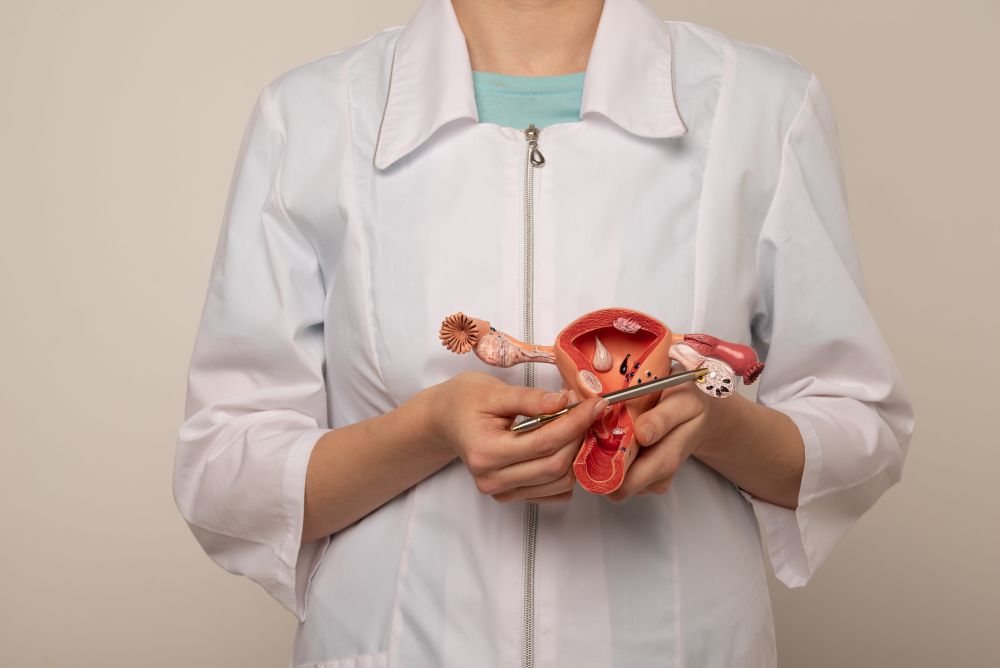
Pregnancy needs physical and emotional readiness, but for some couples—especially after one ovary is removed or only one functions—it may not come easily.
Many people ask, “Can I get pregnant with one ovary?” and whether that limits having children. This article explains how the ovaries work and practical ways to improve conception even with a single ovary.
What are the ovaries, and what do they do?
The ovaries are key female reproductive organs. They produce eggs and sex hormones such as oestrogen and progesterone, which regulate the menstrual cycle and ovulation. Each month a follicle develops on one ovary until ovulation; FSH and LH control growth, release, and movement of the egg into the fallopian tube for possible fertilisation.
Can you get pregnant with one ovary?
Yes—pregnancy is still possible with only one ovary if the remaining ovary ovulates normally, produces good-quality eggs, and releases an egg each cycle as expected.
Success depends on more than ovary count: open fallopian tubes, general health, age, hormone balance, timed intercourse around ovulation, and avoiding risks such as smoking and high stress—all of which you can optimise with sensible self-care.
Five tips to improve pregnancy chances with one ovary
Even with one ovary, the following habits and medical support can improve your odds.
Track ovulation accurately
Keep consistent cycle records to predict ovulation day. Apps, calendars, or ovulation test kits help you plan intercourse in the fertile window—often the 48–72 hours before ovulation—when sperm are most likely to meet the egg.
Stay generally healthy
Light cardio such as brisk walking or yoga for about 30–40 minutes at a time, aiming for roughly 150 minutes per week, can support oestrogen–progesterone balance and blood flow to the ovary.
Eat a balanced diet
Choose folate-rich greens, vitamin C–rich fruit, and whole grains to support egg quality and early pregnancy health.
Strictly avoid high-risk habits
Avoid cigarettes, e-cigarettes, alcohol, and recreational drugs—they disrupt ovarian function, harm egg quality, and raise infertility risk.
See a doctor without delay
If you have tried 6–12 months without success, see an obstetrician–gynaecologist or reproductive specialist for hormone tests or ovarian ultrasound. Treatment may include IUI, IVF, or ICSI, which can succeed even with a single ovary.
If you face infertility or have only one ovary but hope to conceive, Bangkok IVF Clinic (BIC) offers fertility consultations in Bangkok under Dr. Wiwat Chinpilas, a specialist with more than 30 years of experience in infertility and reproductive medicine, with a team that understands your concerns.
BIC provides treatments including ovulation induction, egg freezing, IVF, and PGT-A—even in complex cases or after prior treatment.
For more information or to book a consultation
- Phone: +(66)02-933-1584 to 6
- WhatsApp: Chat on WhatsApp
References
- Can you get pregnant with one ovary? Accessed December 16, 2025, from https://www.everlywell.com/blog/ovarian-reserve/can-you-get-pregnant-with-one-ovary/.


FAQs: pregnancy with one ovary
Q: After removing one ovary, is it harder to get pregnant?
A: Pregnancy remains possible if the remaining tube is open and without adhesions. The remaining ovary can produce good-quality eggs; success also depends on overall health and accurate ovulation tracking.
Q: Does having one ovary affect hormones?
A: One ovary can still produce oestrogen and progesterone, but periodic hormone checks help ensure levels support conception.
Q: Can IVF improve pregnancy chances?
A: Yes. IVF can help even with one ovary by fertilising eggs in the lab under controlled conditions.
Q: How long should I try before seeing a doctor after one ovary is removed?
A: Timing varies with age and health; in general, if there is no pregnancy after about 6 months of trying, seek evaluation and guidance.
Q: Is ovulation induction still effective with one ovary?
A: Yes. The remaining ovary can respond fully to stimulation when managed by your doctor.