
Egg retrieval and egg freezing both help women preserve options as egg quality declines with age, but they differ in stimulation, storage, and when eggs are used. If you are planning a family or weighing options, understanding these differences helps you choose what fits best.
What is egg retrieval?
Egg retrieval (oocyte retrieval) means stimulating the ovaries to produce multiple eggs, then collecting them—usually to use soon in ICSI or IVF for infertility treatment.
Egg retrieval in brief
- Hormonal stimulation of the ovaries
- Retrieval after follicles mature
- Eggs used for ICSI/IVF to try for pregnancy
Typical steps of egg retrieval
- Ovarian stimulation: You receive hormone medication (e.g. FSH or hMG) so multiple follicles grow together.
- Monitoring: Ultrasound (and sometimes blood tests) check follicle growth until they are ready.
- Retrieval: When follicles are the right size, eggs are collected transvaginally with a needle guided to the ovaries.
- Use of eggs: Retrieved eggs go to the lab for ICSI or IVF, then embryos may be transferred to the uterus.
What is egg freezing?
Egg freezing means storing eggs from a woman who is healthy and not ready to use them yet— for example to delay childbearing or keep options for later. You do not have to proceed to IVF or ICSI immediately; eggs are cryopreserved for future use.
Typical steps of egg freezing
- Ovarian stimulation: Same principle as retrieval—hormones grow multiple follicles.
- Monitoring: Ultrasound and blood tests track follicle development.
- Retrieval: Collection is performed the same way as for IVF/ICSI cycles.
- Freezing: Eggs are vitrified and stored in liquid nitrogen at about -196°C until you are ready to use them.
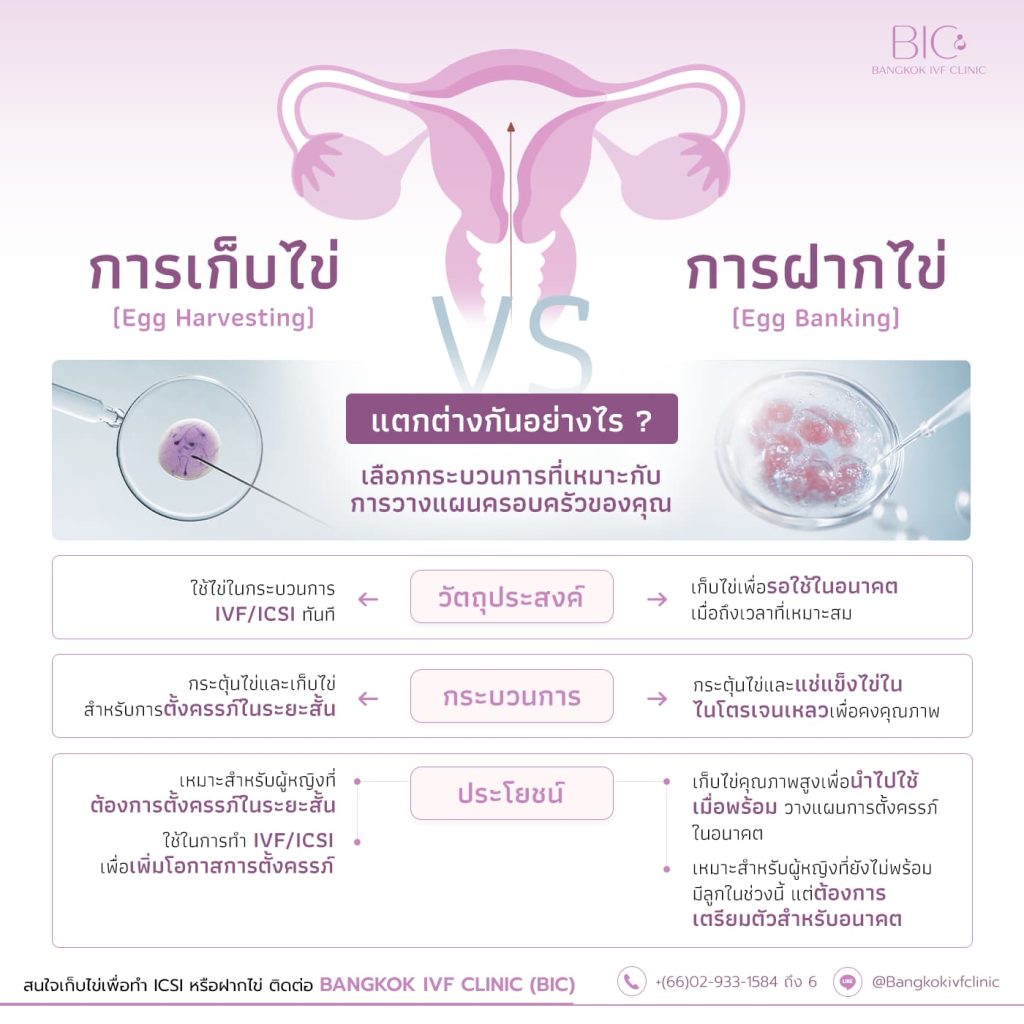
How egg retrieval and egg freezing differ
| Difference | Egg retrieval | Egg freezing |
|---|---|---|
| Main goal | Use eggs soon in IVF/ICSI | Store eggs for future pregnancy when you are ready |
| Best for | Women starting IVF soon or using eggs in a treatment cycle | Women who want to preserve eggs for later |
| Process | Retrieve eggs for immediate IVF/ICSI | Retrieve then freeze for long-term storage |
Who may choose egg retrieval versus egg freezing?
Egg freezing suits women who want to delay pregnancy or bank eggs while they are still young and healthy.
Egg retrieval vs egg freezing—which matches your goal?
- Egg retrieval: For women who plan to use eggs immediately in IVF or ICSI.
- Egg freezing: For women who want to postpone pregnancy and preserve eggs while quality is still good, then thaw when ready for a baby.

Benefits of egg freezing
Freezing offers a path to future parenthood when you are not ready now—by preserving younger, healthier eggs and reducing pressure from age-related decline.
If you are planning your family and want to discuss egg retrieval or freezing, Bangkok IVF Clinic (BIC) offers professional care under Dr. Wiwat Chinpilas, with more than 30 years of experience in infertility and reproductive medicine and modern fertility technology.
Ask us about oocyte retrieval pricing and egg freezing packages and promotions.
For more information or to book a consultation
- Phone: +(66)02-933-1584 to 6
- WhatsApp: Chat on WhatsApp
References
- Oocyte (egg) retrieval. Accessed December 18, 2025, from https://med.emory.edu/departments/gynecology-obstetrics/patient-care/patient-education/oocyte-retrieval/index.html
- Freezing Eggs: Preserving Fertility for the Future. Accessed December 18, 2025, from https://www.hopkinsmedicine.org/health/wellness-and-prevention/freezing-eggs-preserving-fertility-for-the-future


FAQs: egg retrieval and egg freezing
Q: How do egg retrieval and egg freezing differ?
A: Egg retrieval is for short-term use in IVF or ICSI. Egg freezing stores eggs for future pregnancy.
Q: How long can frozen eggs be stored?
A: Eggs can be stored for many years. Use is often planned with medical advice, commonly with attention to age and clinic policy—many women use stored eggs well before about age 40.
Q: Is egg retrieval safe?
A: Retrieval is a minor procedure with low risk when performed by an experienced team using standard lab quality control.